
A Tool That Gives Students a Voice—Without Requiring Words They Don't Have
INTRODUCING: Decoding My Survival Signals
helps children and youth identify their stress responses—so the adults around them can respond with clarity rather than guesswork or blame.
What their body feels like when stress is building (tight, buzzy, heavy, numb)
Which survival state they're in (Fight, Flight, Freeze, or Fawn)
What sensations, emotions, and thoughts show up in each state
What helps them feel safer and more regulated
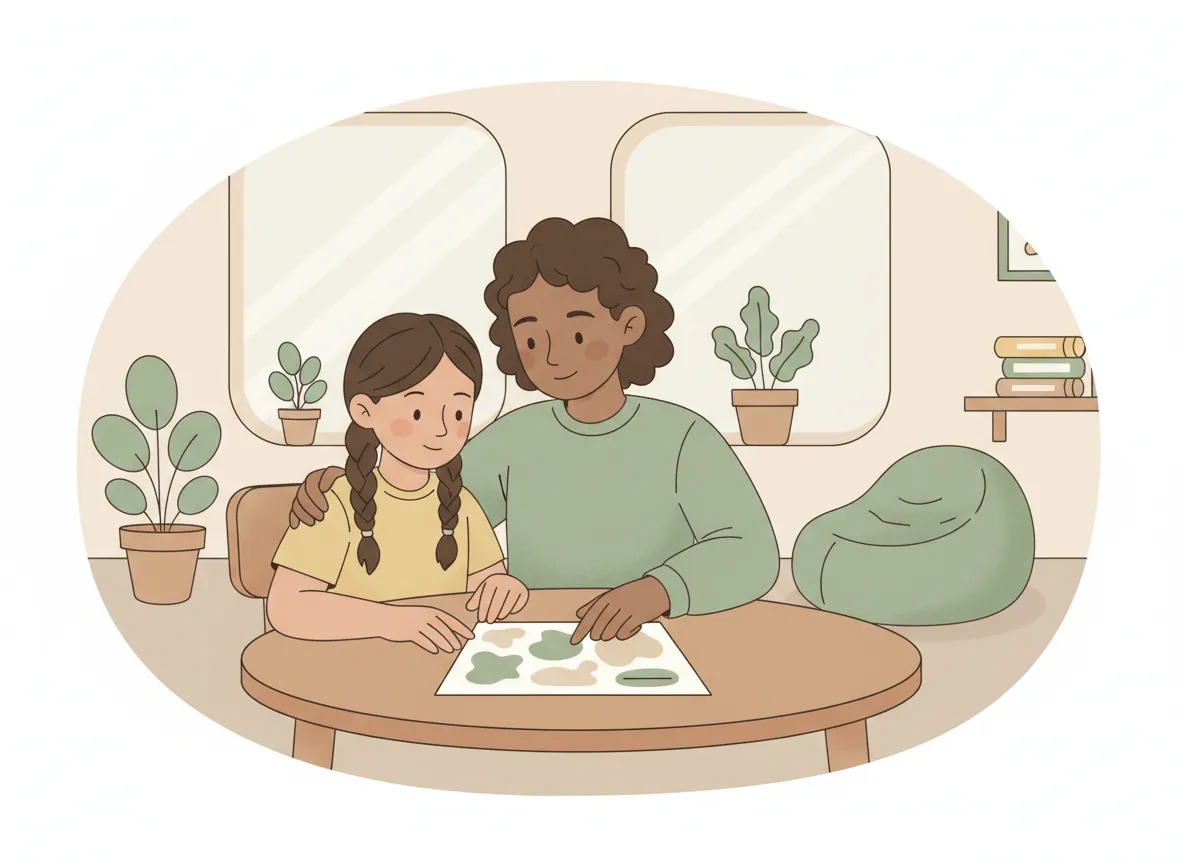
Perfect for classrooms, counseling sessions, and kitchen tables where big feelings often show up as “challenging behavior.”
Get the free PDF delivered to your inbox
Enter your email to receive “Decoding My Survival Signals” plus occasional, grounded insights on trauma-informed practice you can actually use.
No spam. Just practical tools for nervous-system-aware care.
Includes kid-friendly visuals, reflection prompts, and language adults can use in the moment.
- Trauma-aware without being overwhelming
- Flexible for individual, small group, or whole class use
- Helps move from “What’s wrong?” to “What’s happening?”
For the adults who care deeply, and feel worn thin
You can name trauma-informed care—and still feel stuck in the moment.
You’ve read the books, sat through the PD days, and you genuinely believe that behavior is communication. Still, real life looks like:
- A student flips a desk—or shuts down completely—and your mind races: “Is this defiance, anxiety, trauma, something else?”
- You want to co-regulate, but you’re managing 25 other students or three other kids at home.
- You second-guess yourself later: “Did I just reinforce the behavior? Did I miss a survival signal?”
It’s not that you don’t care or don’t know the theory. It’s that in the stress of the moment, you don’t have a simple, shared language with kids for what their nervous system is trying to do to keep them safe.
From “fixing behavior” to reading signals
When kids can see their survival patterns, everything softens.
A nervous system in survival mode isn’t trying to be “difficult.” It’s trying to stay safe the way it learned how. When we help children notice and name their survival signals, we:
- Lower shame and blame—for them and for us.
- Create a shared, non-judgmental language for what’s happening.
- Open the door to co-regulation and real skill building, not just compliance.
“Decoding My Survival Signals” gives kids and adults this shared map, in language that feels honest, hopeful, and developmentally appropriate.
What shifts when we decode, not discipline:
- Students start saying things like “My body is in guard-dog mode” instead of “I’m just bad.”
- Adults feel more anchored and less reactive when behavior spikes.
- Conversations after incidents become chances to connect, not just consequences to hand out.
This is the belief shift Decoding Funnel exists to support: from controlling behavior to understanding survival.
Introducing the free PDF
“Decoding My Survival Signals”
A printable, conversation-ready tool that helps children and youth identify how their body, thoughts, and actions signal stress—while giving adults a practical map for how to respond.
Kid-centered & visual
Simple illustrations and gentle language help children spot patterns without feeling labeled or shamed.
Adult-guided prompts
Short scripts and reflection questions support educators, therapists, and caregivers in leading calm, grounded conversations.
Ready for real life
Use it as a one-time activity, a recurring check‑in, or a visual anchor when behavior spikes. Low-prep, high-impact.
Inside the PDF
What “Decoding My Survival Signals” includes
- A kid-friendly overview of survival responses (fight, flight, freeze, fawn) using accessible, non-pathologizing language.
- Body, thought, and behavior “signal lists” kids can check off to describe what happens for them.
- Space for students to personalize: “When my body is in survival mode, I often…”
- Gentle reflection prompts for after an incident—when everyone is more regulated.
- Adult notes with suggested phrases and questions that keep curiosity and connection at the center.
You can print individual pages, use it digitally on tablets, or adapt the language into your own visuals and routines.
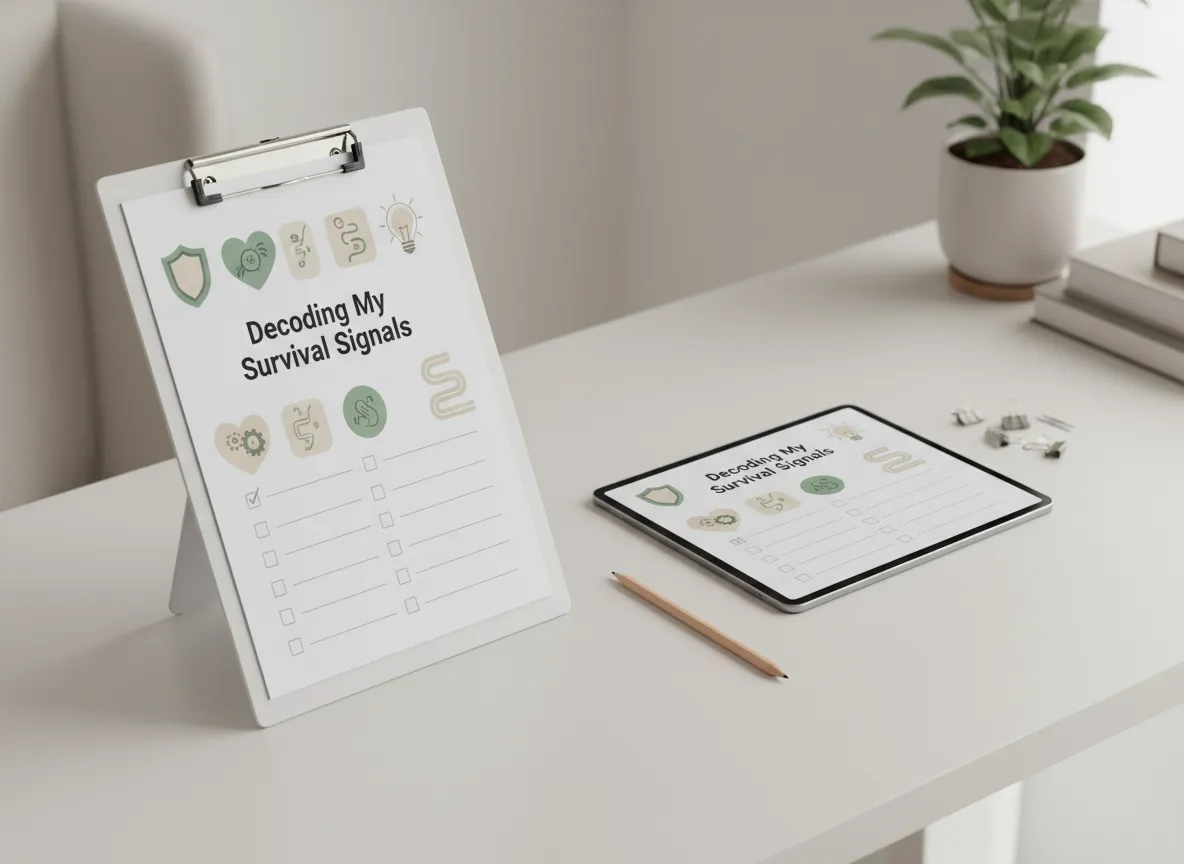
The design is intentionally calm and spacious—easy to photocopy in black and white while still feeling inviting for kids.
Who this is for
Designed for people who already value trauma-informed care—and want concrete tools.
You don’t need another theory-heavy resource. You need something you can print on a Tuesday and use by Wednesday.
Educators
Classroom teachers, school counselors, administrators, and support staff working with students who carry complex stories into the room.
Mental health providers
Therapists, social workers, school psychologists, and youth workers supporting clients in 1:1 or group settings.
Caregivers & parents
Adults caring for kids who move quickly into survival mode at home, in community spaces, or during transitions.
You, if you’re…
- Familiar with trauma-informed language.
- Hungry for tools that honor both kids and adults.
- Committed to staying curious about behavior.

About Decoding Funnel
Rooted in trauma-aware practice. Tested with real classrooms and families.
Decoding Funnel exists to translate nervous system science into tools that actually fit into the messy, beautiful reality of schools and homes. Our resources are shaped by years of working alongside educators, mental health providers, and caregivers who are doing their best with limited time and support.
- Grounded in trauma-informed, attachment-aware, and equity-minded perspectives.
- Informed by current nervous system research without heavy jargon.
- Co-created and field-tested with youth and the adults who support them.
The goal is simple: help you feel a little less alone and a lot more equipped the next time a young person’s survival system shows up in front of you.
Ready to decode survival signals with the kids you support?
Drop your email below and get instant access to the “Decoding My Survival Signals” PDF—plus occasional, carefully curated tools to support nervous-system-aware care in your setting.
You can unsubscribe any time. Your trust—and your students’ trust—matters.
Decoding Funnel is not a replacement for mental health treatment, crisis services, or individualized professional support. It’s a set of tools to help you and the young people in your life understand and work with survival responses more gently.
If you are concerned about a child’s safety, please reach out to local crisis resources or trusted professionals in your community.
© 2026 Decoding Funnel. All rights reserved.
Calm, grounded tools for trauma-aware teaching and caregiving.