INTRODUCING:
Decoding My Survival Signals
A STUDENT INPUT Tool That REVEALS WHAT behavior HAS BEEN PROTECTING, Without Requiring Words They Don't YET Have
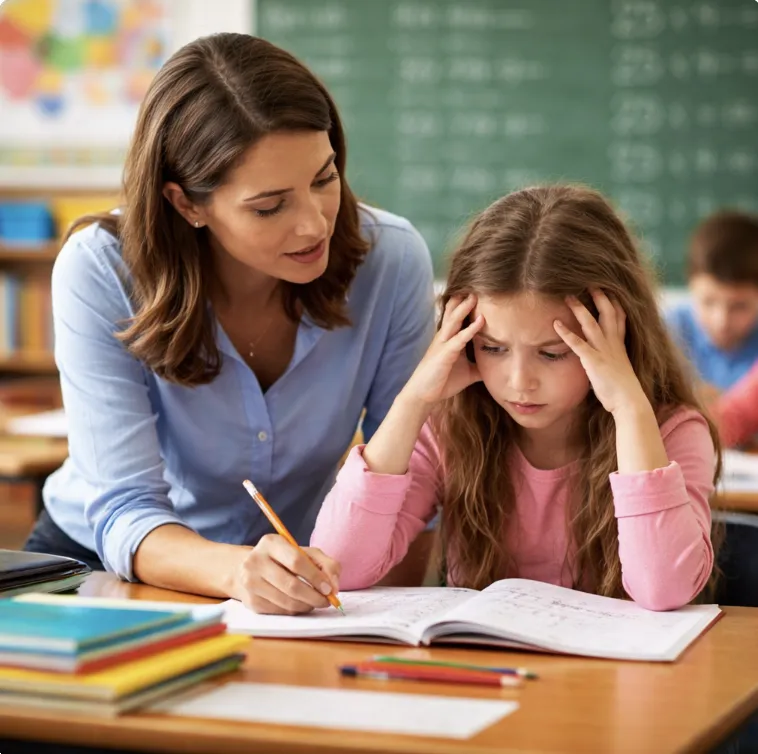
Stop guessing — understand students now
Discover the tool that finally gives students a voice for their feelings, beliefs, and behaviors — and the 90-minute training that shows you exactly how to use it.
Everything You Need to Start Understanding Your Students Today
Complete Tool - Decoding My Survival Signals for kids and teens (PDF)
90-Minute Recorded Training with Rick & Doris on how to use it
Lifetime Access—Watch as Many Times as You Need
Use It Tomorrow with Your Students
For teachers & providers who care deeply, and feel stretched thin
Perfect for classrooms and counseling sessions where big feelings often show up as “challenging behavior.”
A student flips a desk—or shuts down completely—and your mind races: “Is this defiance, anxiety, trauma, something else?”
A student escalates and you must decide—comfort, redirect, or remove—while keeping the class safe.
You want to be a source of co-regulation, but you’re managing 25 other students.
You want consistent, staff-wide language, but PD doesn’t stick in minute-by-minute chaos.
You second-guess yourself later: “Did I just reinforce the behavior? Did I miss a survival signal? Did I shame them?"
What you get:
A TOOL THAT HELPS STUDENTS IDENTIFY WHAT THEY EXPERIENCE IN SURVIVAL STATES (Protection Mode):
What they recognize it can look like to others on the outside (in Fight, Flight, Freeze, or Fawn)
What sensations they feel in their body when stress is building (tight, buzzy, heavy, numb)
What emotions, and thoughts show up in each state
What helps them feel safer and more regulated, and how you can help to provide that
WHAT YOU CAN DO WITH THIS INSIGHT:
Predict meltdowns before they happen by recognizing early warning signs
Prevent misunderstanding them so you can avoid becoming part of the trigger or escalation
Intervene with confidence at the right moment with strategies that match their nervous system
Create personalized regulation plans based on what actually works for them
From “managing behavior” to UNDERSTANDING signals
When kids see their survival patterns being validated instead of judged, everything softens.
A nervous system in survival mode isn’t trying to be “difficult.” It’s trying to stay safe the way it learned how.
When we help children notice and name their survival signals, we:
Lower shame and blame—for them and for us.
Create a shared, non-judgmental language for what’s happening.
Open the door to co-regulation and real skill building, not just compliance.
“Decoding My Survival Signals” gives kids and adults this shared map, in language that feels authentic, hopeful, and developmentally appropriate.
What shifts when we decode, not discipline?
Students start saying things like “My body is in guard-dog mode” instead of “I’m just bad.”
Adults feel more anchored and less reactive when they start to see behavior spikes.
Conversations after incidents become opportunities to connect and repair, not just consequences to hand out.
This is the belief shift "Decoding My Survival Signals" exists to support: from controlling behavior to understanding survival.
“Decoding My Survival Signals”
A printable, conversation-ready tool that helps children and youth identify how their body, thoughts, and actions signal stress—while giving adults a practical map for how to respond.
Kid-centered & visual
Simple illustrations and gentle authentic language help children and teens spot patterns without feeling labeled or shamed.
Adult-guided prompts
Short phrases and reflections support educators, therapists, and caregivers in leading calm, grounded conversations.
Ready for real life
Use it as a one-time activity, a recurring check‑in, or a visual anchor when behavior spikes. Low-prep, high-impact.
What's inside the PDF
A Trauma-Informed Introduction
A gentle, first-person narrative explaining how trauma affects the nervous system
Kid-friendly language that validates without pathologizing
Helps students understand why their body and mind respond the way they do under stress
Four Complete Survival State Sections (Fight, Flight, Freeze, Fawn)
Each section includes four pages that help students identify:
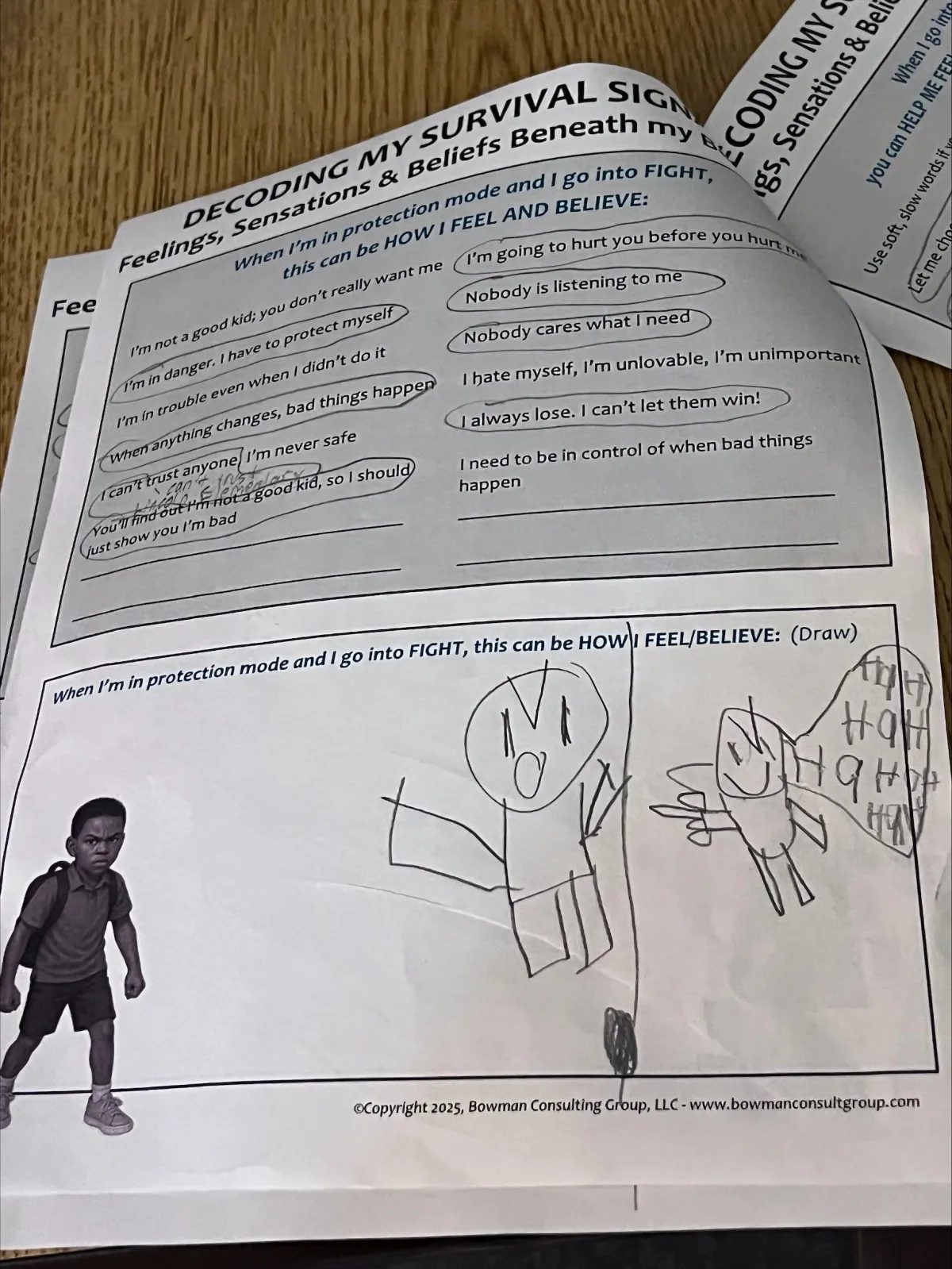
"What it looks like on the outside" - Observable behaviors others see
"How my body feels" - Internal sensations (tight, buzzy, heavy, numb, etc.)
"What I feel or believe" - Emotions and thoughts in this state
"What helps me feel safe" - Co-regulation and de-escalation strategies, and what adults can do
Recognition-Based Format
Sentence stems and descriptors that allow students to circle, check, or point
Blank spaces to add their own words
Drawing space on every page for visual expression
Can be completed by circling, writing, drawing, or dictating
Co-Created Tool
Designed to be completed WITH a trusted adult, not alone
Builds relationship and trust through the process
Creates a personalized map of the student's internal world
Creates a means for the student to share with other adults
No pressure to perform—just space to be seen and understood
17 pages for ~ages 7+ to identify protective patterns, body sensations, and co-regulation strategies that actually work.
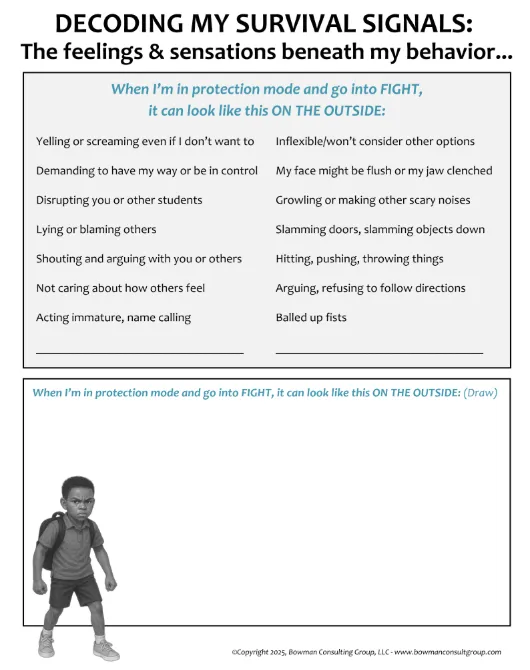
You can print individual pages, use it digitally on tablets, or adapt the language into your own visuals and routines.
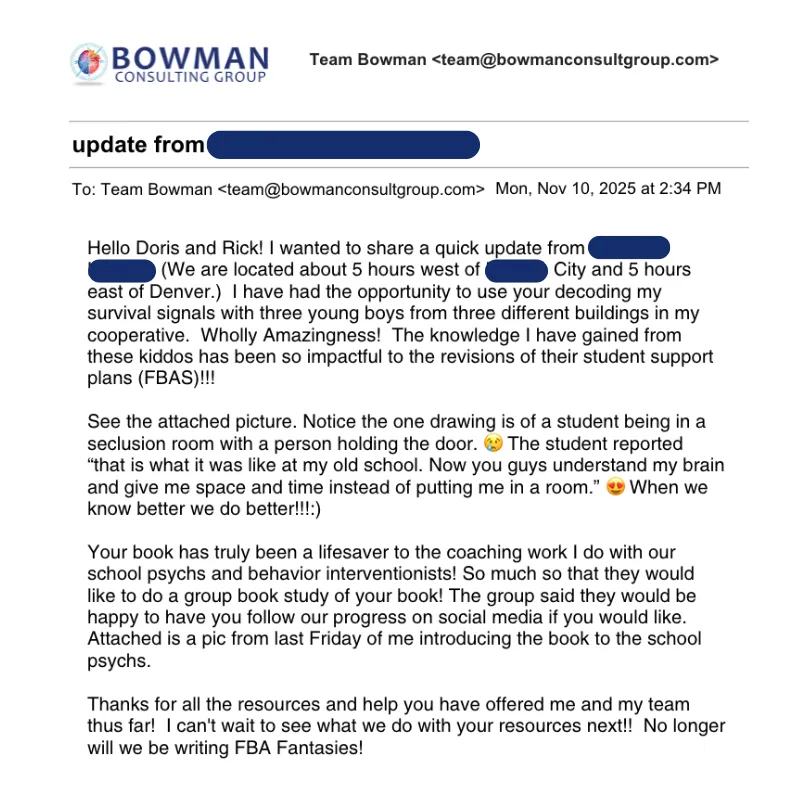
Here is how a fellow member of this movement is using the tool...
Who is this for
Designed for people who new to this work, and those who already value neuroscience-aligned, trauma-responsive practices—and want concrete tools.
Educators
Classroom teachers, school counselors, administrators, and support staff working with students who carry complex stories into the room.
Mental health providers
Therapists, social workers, school psychologists, and youth workers supporting clients in 1:1, group, or daily living settings.
Caregivers & parents
Adults caring for kids who move quickly into survival mode at home, in community spaces, or during transitions.
YOU, if you’re…
Familiar with trauma-informed language.
Hungry for tools that honor both kids and adults.
Committed to staying curious about behavior, and avoiding doing further harm.
Meet Team Bowman—
Rick & Doris

Rick Bowman
As a trauma practitioner, therapist, and someone who grew up in a home filled with childhood adversity, Rick shares from lived experience of what happens when the nervous system gets stuck in survival mode. He's spent decades as a clinician, professor, and school administrator helping adults see behavior not as defiance, but as a nervous system doing exactly what it was designed to do—protect.
Co-author of Your FBA is a Fantasy! and NEW RELEASE "Facing the Fantasy, Finding the Way Forward"
Doris Bowman
Special education teacher turned national trainer and trauma specialist. Doris spent years leading a self-contained program for students with the most complex emotional and behavioral needs—where she discovered that traditional behavior plans weren't just failing, they were re-traumatizing. Now she travels the country equipping educators with neuroscience-aligned approaches that actually work.
Co-author of Your FBA is a Fantasy! and NEW RELEASE "Facing the Fantasy, Finding the Way Forward"
Ready to decode survival signals with the kids you support?
Decoding My Survival Signals exists to translate nervous system science into tools that actually fit into the messy, beautiful reality of schools and homes. Our resources are shaped by years of working alongside educators, mental health providers, and caregivers who are doing their best with limited time and support.
Grounded in trauma-responsive, attachment-aware, and neuroscience-based perspectives.
Informed by current nervous system research, without heavy jargon.
Co-created and field-tested with youth and the adults who support them.
Publicly posting, sharing, or otherwise disseminating this tool or trainung video in ways that make it openly accessible is expressly prohibited under copyright. By purchasing access to this tool and video, you are doing so only for personal access and use with immediate colleagues.
Decoding My Survival Signals is not a replacement for mental health treatment, crisis services, or individualized professional support. It’s a set of tools to help you and the young people in your life understand and work with survival responses more gently.
If you are concerned about a child’s safety, please reach out to local crisis resources or trusted professionals in your community.
© 2026 Bowman Consult Group. All rights reserved.
Site content and resources by Rick & Doris Bowman.